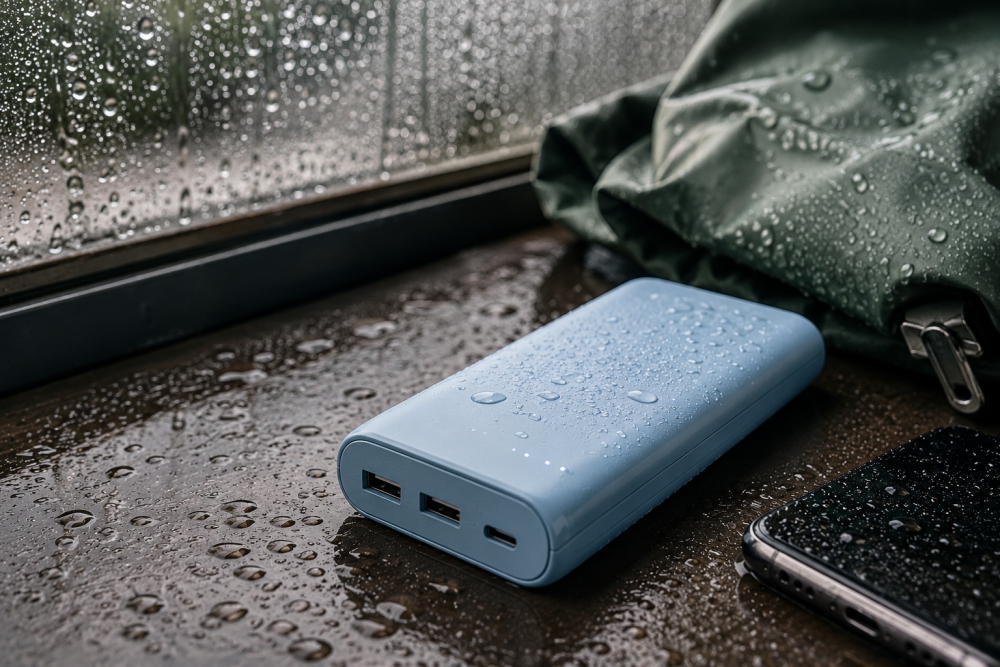

Yes. High humidity in the Philippines can slowly damage power banks by causing internal moisture buildup, overheating, corrosion, unstable charging behavior, and faster battery degradation, especially during outdoor use, rainy season commuting, and exposure to sudden temperature changes.
| Problem | Can Humidity Cause It? | Risk Level |
|---|---|---|
| Slow charging | Yes | Medium |
| USB port corrosion | Yes | High |
| Overheating | Indirectly | High |
| Random charging disconnects | Yes | Medium |
| Battery swelling | Sometimes | Critical |
| Reduced battery lifespan | Yes | High |
Humidity is one of the most overlooked reasons why power banks fail early in the Philippines. Most people blame cheap brands or “bad batteries,” but after testing power banks in Manila heat, Cebu humidity, and rainy-season commuting, I noticed that moisture exposure quietly destroys battery health much faster than most users realize.
Last Updated: May 2026
Why Humidity Is a Bigger Problem in the Philippines
The Philippines combines:
- high heat
- high humidity
- sudden rain exposure
- intense outdoor usage
which creates conditions that power banks were not originally designed for.
Philippine humidity levels regularly reach:
70%–90%
especially during:
- rainy season
- typhoon months
- Metro Manila afternoons
At the same time, outdoor temperatures commonly hit:
33°C–38°C.
Lithium battery systems actually perform best around:
20°C–25°C.
That difference creates major stress on:
- battery cells
- charging circuits
- USB ports
- internal temperature regulation systems
During testing around:
- Metro Manila
- Pasig
- Cebu
- Davao
I noticed power banks heat up significantly faster when:
- carried inside humid bags
- exposed to rain moisture
- charged after outdoor use
- left inside motorcycles or parked cars
This becomes even worse during:
- typhoon season
- rainy months
- long commuting days
What Humidity Actually Does to a Power Bank
Humidity usually does NOT destroy a power bank instantly.
Instead:
it slowly damages internal components over time.
The most common problems are:
- internal condensation
- corrosion on charging ports
- unstable charging
- overheating
- reduced battery lifespan
This is especially common in:
- cheap marketplace power banks
- fake “50,000mAh” units
- poorly sealed battery packs
How Moisture Gets Inside
A lot of users think:
“If my power bank didn’t get wet, it’s safe.”
Not exactly.
Humidity can still affect:
- USB ports
- ventilation gaps
- internal circuit boards
especially when:
- moving between air-conditioned rooms and outdoor heat
- storing power banks inside humid bags
- charging near windows during rain
That temperature shift creates:
condensation.
And condensation is dangerous for lithium battery electronics.
Signs Humidity Is Affecting Your Power Bank
These are the warning signs I’ve personally noticed during testing in PH weather.
Slow charging
One of the earliest symptoms.
Random charging disconnects
Especially while moving or commuting.
Overheating during normal charging
Very common in humid outdoor conditions.
Rust or discoloration on USB ports
A major warning sign.
Battery swelling
Serious safety issue.
Moisture smell or metallic odor
Stop using it immediately.
Why Cheap Power Banks Fail Faster in Humid Weather
This is a huge problem on:
- Shopee
- TikTok Shop
- Lazada marketplace sellers
Cheap power banks often use:
- low-quality battery cells
- weak internal insulation
- poor thermal protection
- recycled lithium cells
which makes them extremely vulnerable to:
moisture damage.
Brands like:
- Anker
- UGREEN
- Baseus
- Xiaomi
usually survive Philippine humidity much better because they include:
- thermal sensors
- Safety IC systems
- better battery sealing
- smarter power regulation
This is also why:
ICC and BPS certification matters in 2026.
Cheap non-certified power banks often fail faster in humid weather because they lack proper:
- thermal protection
- battery quality control
- moisture resistance standards
When buying in the Philippines, I strongly recommend checking for:
- ICC sticker
- PS mark
- official DTI-BPS certification
especially for high-capacity or fast-charging models.
Which Power Bank Brands Handle Humidity Better?
After testing in Philippine conditions, these brands usually perform more consistently in:
- humid commuting
- outdoor charging
- rainy-season usage
- long-term heat exposure
| Brand | Why It Performs Better |
|---|---|
| Anker | Excellent thermal management |
| UGREEN | Stable PD charging regulation |
| Baseus | Good heat dissipation |
| Xiaomi | Reliable budget-level protection |
| Romoss (Original only) | Better sealing than generic brands |
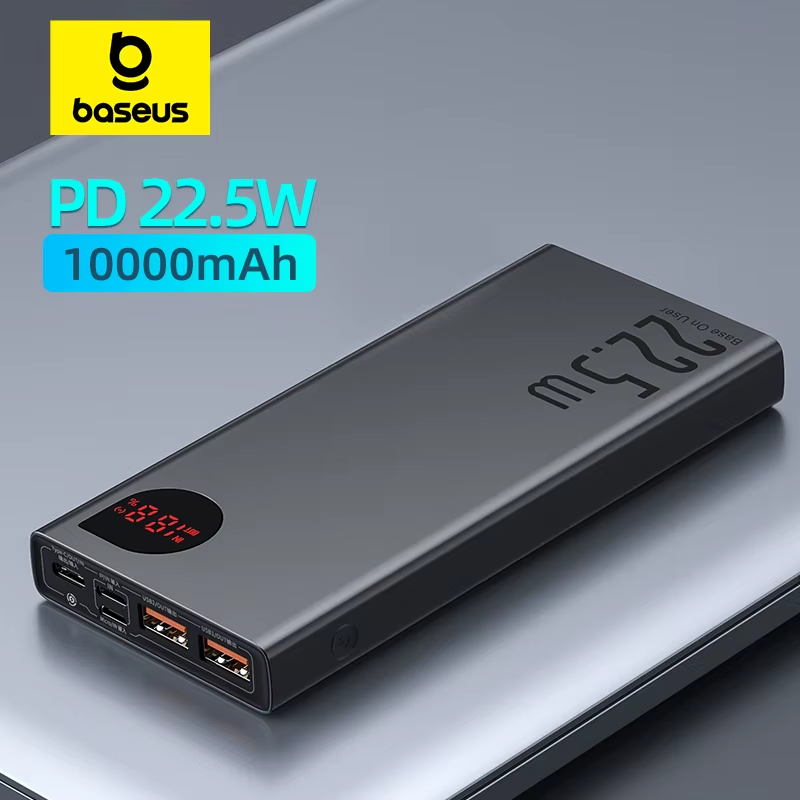
The biggest difference I noticed:
original branded models recover from heat much faster after charging.
Cheap fake marketplace units often stay hot for a long time even after charging stops.
Can Humidity Cause Overheating?
Yes.
Humidity itself does not “create” heat, but it:
traps heat more aggressively.
In the Philippines:
- phones already run hot
- fast charging creates heat
- outdoor temperatures stay high
Humidity makes it harder for the power bank to cool down properly.
During testing in Manila traffic and outdoor cafés, I noticed:
- charging speeds slowing down
- thermal throttling activating earlier
- power banks becoming unusually warm inside bags
This is why:
heat + humidity together are dangerous.
Why Riders and Commuters Have More Problems
Delivery riders and commuters are especially affected because power banks constantly experience:
- direct sunlight
- rain exposure
- trapped bag humidity
- vibration
- rapid temperature changes
I’ve noticed this a lot with:
- Angkas riders
- Foodpanda riders
- Grab drivers
especially during rainy-season shifts.
Is It Safe to Use a Damp Power Bank?
No.
If:
- the ports feel wet
- condensation is visible
- rainwater entered the ports
you should:
stop charging immediately.
Charging a damp lithium battery device can cause:
- short circuits
- overheating
- unstable voltage behavior
- permanent battery damage
In rare cases:
- smoke
- swelling
- thermal runaway
can happen.
Pro Tip: Avoid Charging Immediately After Leaving Aircon
This is something many Filipinos accidentally do.
If your power bank feels:
- cold from air-conditioning
- then suddenly exposed to humid outdoor heat
wait:
5–10 minutes before charging.
Why?
Because sudden temperature shifts can create:
condensation inside USB ports and charging circuits.
That tiny moisture buildup can cause:
- unstable charging
- random disconnects
- overheating behavior
especially in very humid weather.
Myth: Rice Can Safely “Dry” a Damp Power Bank
A lot of people still believe:
putting electronics in rice fixes moisture problems.
In reality:
- rice does not remove deep internal condensation
- tiny rice particles may enter charging ports
- moisture can remain trapped inside the battery housing
If a power bank gets wet:
- turn it off
- disconnect all cables
- dry the exterior immediately
- let it air-dry completely before charging
For serious moisture exposure:
replacing the power bank is often safer than risking battery instability.
Best Way to Protect a Power Bank in Philippine Humidity
This is what actually helps in real PH conditions.
Keep it inside a dry pouch
Especially during rainy season.
Avoid leaving it inside parked cars
Cars trap both:
- heat
- moisture
very aggressively.
Let it cool before charging
Especially after outdoor use.
Use shorter USB-C cables
Long cheap cables trap more heat.
Avoid ultra-cheap fake power banks
Humidity destroys them much faster.
Keep silica gel packets in gadget bags
Very underrated trick during typhoon season.
Why USB-C PD Helps in Humid Conditions
Modern USB-C PD systems are smarter than older USB-A charging systems.
Good PD power banks can:
- regulate charging temperature
- reduce unstable current flow
- slow charging automatically during overheating
This is why newer:
- 20W
- 30W PD models
usually survive Philippine conditions better than very old cheap units.
Can Humidity Damage Battery Capacity Permanently?
Yes.
Long-term exposure to:
- heat
- moisture
- unstable charging temperatures
slowly degrades lithium battery cells.
That means:
- fewer charge cycles
- weaker battery retention
- faster battery aging
This is one reason some power banks suddenly feel:
“much weaker after one year.”
Why Fast Charging Sometimes Slows Down in Humid Weather
This is called:
thermal throttling.
When internal temperatures rise too high, the Safety IC automatically reduces charging speed to prevent battery damage.
That’s why:
- a 30W power bank may suddenly charge at only 10W–15W outdoors
- charging becomes slower during hot humid afternoons
- power banks feel warm inside backpacks
Most users think:
“the power bank is broken.”
Usually:
it’s actually protecting itself.
Common Mistakes Filipinos Make
Charging inside closed bags
Traps heat and moisture together.
Leaving power banks near windows
Rain humidity builds up quickly.
Buying fake high-capacity units
Very common source of overheating.
Using damaged charging cables
Can worsen heat buildup.
Ignoring port corrosion
Corrosion spreads slowly over time.
Warning Signs You Should Never Ignore
Stop using the power bank immediately if you notice:
- swelling
- sweet metallic smell
- visible rust near ports
- smoke or burning smell
- severe overheating while idle
These are dangerous lithium battery warning signs.
Final Thoughts
Humidity absolutely can damage power banks in the Philippines, especially when combined with:
- outdoor heat
- rain exposure
- cheap battery cells
- poor charging habits
From what I’ve tested, the biggest difference is not just the brand itself:
it’s how the power bank is used and stored in PH conditions.
A high-quality USB-C PD power bank with proper thermal protection will survive tropical humidity much longer than fake marketplace units with exaggerated battery claims.
FAQ
Can humidity damage a power bank?
Yes. High humidity can create internal condensation, corrosion, overheating, and battery degradation over time.
Why does my power bank get hot in the Philippines?
Philippine heat and humidity trap thermal energy, especially during fast charging or outdoor use.
Is it safe to charge a damp power bank?
No. Never charge a wet or damp power bank because it may cause short circuits or battery instability.
Can humidity reduce battery life?
Yes. Long-term humidity exposure can permanently weaken lithium battery cells and reduce charging performance.
Why does my power bank charge slower outdoors?
Outdoor heat and humidity trigger thermal throttling, causing the Safety IC to reduce charging speed to protect the battery.

Hi! I focus on power banks, charging systems, and real-world performance — mostly trying to understand why specs don’t always match reality. I enjoy breaking things down in a simple way, even if I overthink them first. In my free time, I hang out with my cat, drink more coffee than I probably should and sometimes forget to charge my phone in time, that is why power banks are my best friends!