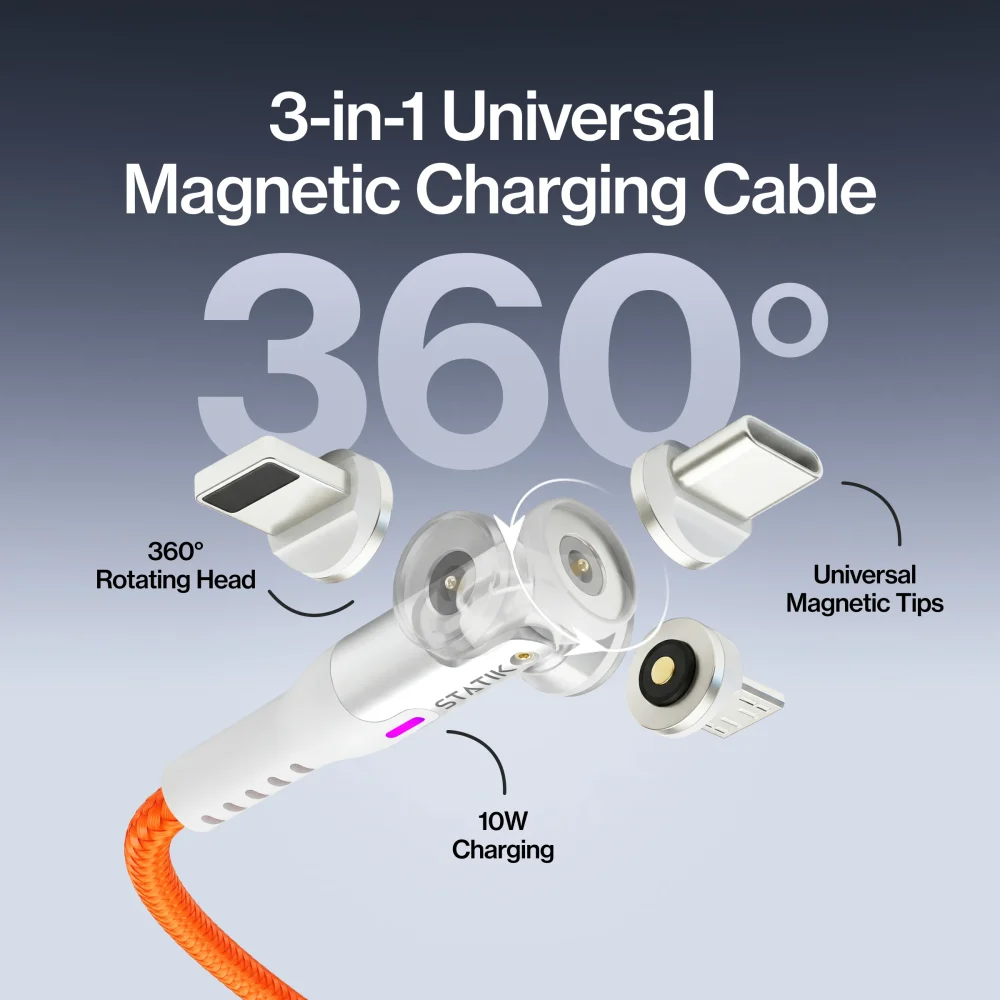

I like magnetic cables for one very simple reason: they solve a real everyday annoyance. You sit at a desk, reach for your phone, pull the cable slightly, and instead of dragging the device across the table, the connector snaps away.
That sounds small until it happens every day.
But magnetic USB-C cables are also one of those accessories where convenience can hide real technical risk. Some are genuinely useful. Some are fine for low-power charging. Some are not something I would connect to an expensive phone, tablet, laptop or power bank.
So the real question is not only “what is the best magnetic USB-C cable?” The better question is:
Should you use one at all, and for which device?
My short answer: use magnetic USB-C cables carefully. I like them most for low-to-medium power charging, desk setups, bedside charging, older phones, small gadgets and power banks. I am much more cautious with laptops, high-wattage USB-C PD charging and cheap detachable magnetic tips.
USB-C cables are not all the same. The USB-IF explains that certified cables are tested for specific capabilities, and users still need to choose a cable that fits their actual use case. That matters even more when magnets, detachable tips and high-wattage charging enter the picture.
If you want the safest general approach:
- Best for phones: a reputable 60W to 100W magnetic USB-C cable
- Best for power banks: a short, durable magnetic cable with stable contact
- Best for desk use: a self-coiling or magnetic-wrap cable, not necessarily a detachable-tip cable
- Best for laptops: use a certified non-magnetic USB-C cable unless you really know the cable quality
- Avoid: ultra-cheap magnetic tips with exposed pins, weak magnets, vague wattage claims or no brand support
What Is a Magnetic USB-C Cable?
A magnetic USB-C cable usually means one of three designs:
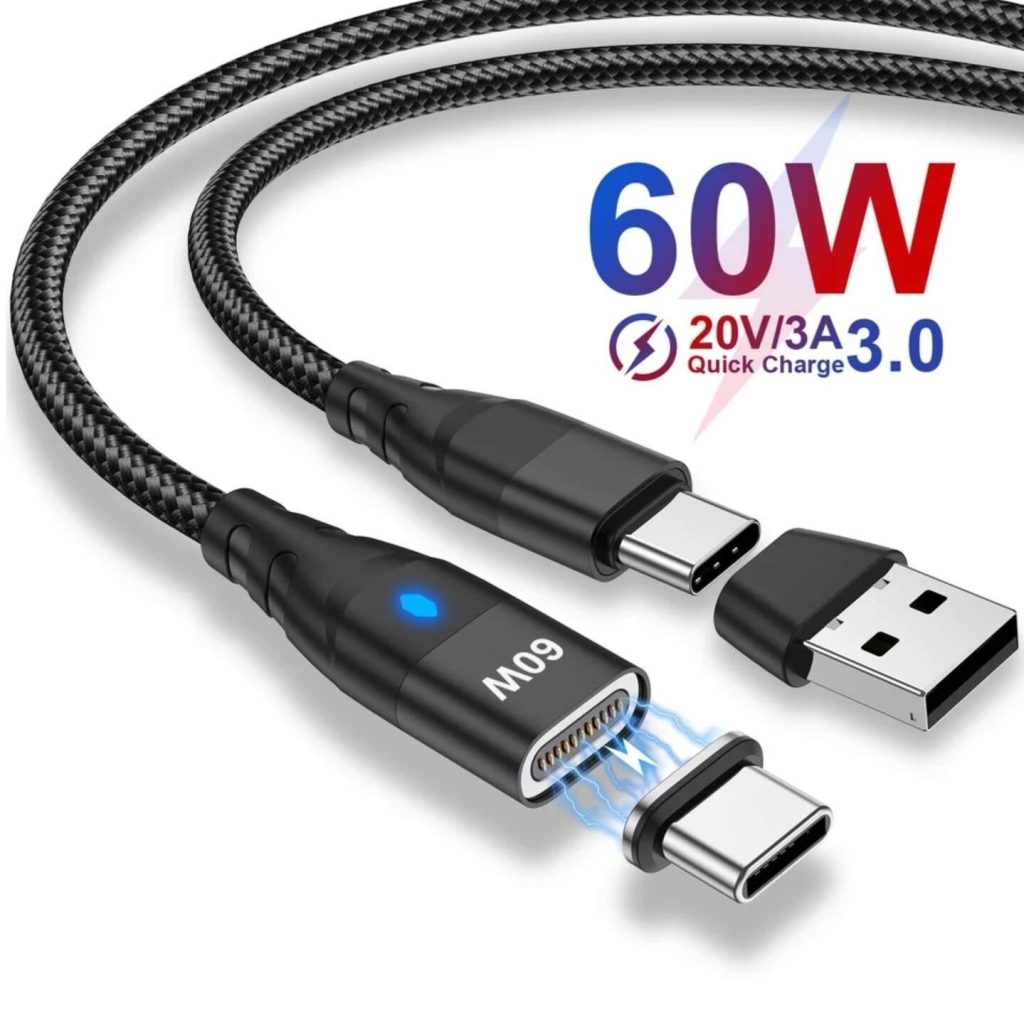
- A cable with a detachable magnetic tip that stays in your device
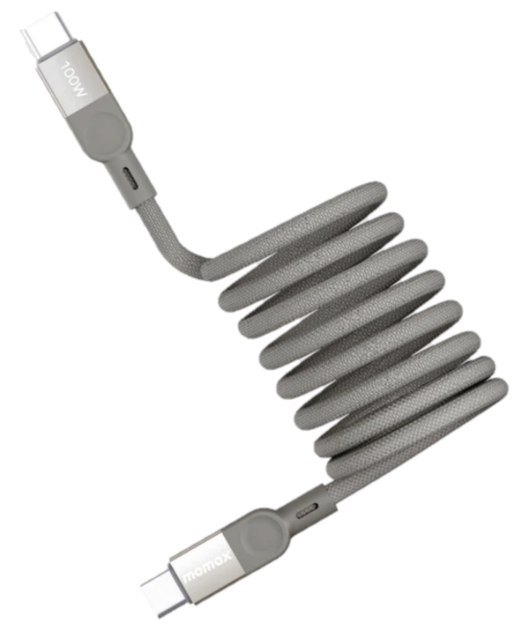
- A USB-C cable with magnetic sections that coil or organize itself
- A magnetic adapter that turns a normal USB-C connection into a snap-on connector
These are very different products.
The most controversial type is the detachable-tip cable. That is the one where a small USB-C plug remains inside your phone, tablet or power bank, and the cable connects magnetically to that plug.
It is convenient, but it also adds another contact point between the charger and your device. That is where quality becomes important.
Are Magnetic USB-C Cables Safe?
This is the part many shopping guides avoid.
Magnetic USB-C cables can be safe for simple charging if they are well-made and used with the right devices. But they are not as universally safe or standards-clean as normal USB-C cables.
Some technical reviewers and USB-C communities strongly warn against magnetic detachable-tip USB-C cables because poor designs can increase the risk of shorting, unstable contact or device damage. PCWorld’s cable testing guide also advises against magnetic connector-end USB-C cables because of the shorting risk.
That does not mean every magnetic cable will destroy your device. It means I would not treat them like normal USB-C cables.
A normal USB-C cable is boring. That is part of the point. The connector, cable, e-marker chip, power negotiation and device compatibility are designed to work as one controlled system.
A magnetic cable adds a shortcut in the middle.
My Practical Rule
I would use a magnetic USB-C cable for:
- charging a phone at a desk
- charging a power bank
- bedside charging
- low-power accessories
- travel convenience
- reducing port wear from repeated plugging
I would be more careful using one for:
- laptops
- tablets drawing high wattage
- 100W to 240W charging
- expensive devices
- data transfer
- car charging
- humid or dusty environments
What Specs Matter Most?
1. Wattage Support
Common magnetic USB-C cables advertise:
- 60W
- 100W
- 140W
- 240W
Do not buy based only on the highest number.
For most phones and power banks, 60W or 100W is already enough. A 240W claim sounds impressive, but it only matters if your charger, cable and device all support that power level.
USB-IF and UL both discuss 240W USB-C cable certification and testing, which shows that high-power cables are not just about thicker wires. They need proper design and validation.
2. E-Marker Chip
For high-wattage USB-C charging, an e-marker chip tells the charger and device what the cable can safely handle.
If a cable claims 100W or 240W but says nothing about e-marker support, I become skeptical.
For simple phone charging, this may not matter as much. For laptops and high-output power banks, it matters a lot.
3. Magnet Strength
The magnet should be strong enough to connect cleanly, but not so aggressive that it pulls the device or stresses the port.
A good magnetic cable should:
- snap into place smoothly
- disconnect safely if pulled
- not wiggle during charging
- not expose pins too easily
- not attract too much metal dust
4. Contact Quality
This is where cheap cables often fail.
Poor contact can cause:
- intermittent charging
- slow charging
- heat
- random disconnects
- charging start-stop loops
If your phone keeps blinking between charging and not charging, stop using that cable.
5. Data Transfer Support
Many magnetic charging cables are charge-only or slow data cables.
If you want to move files, connect to a monitor or use USB4/Thunderbolt speeds, do not assume a magnetic cable can do it. Many USB-C cables look similar but support very different charging and data capabilities.
Best Magnetic USB-C Cable Types by Use Case
Best for Phones
For phones, I would choose a short 60W to 100W cable from a known accessory brand.
Why:
- phones do not need extreme wattage
- shorter cables reduce mess
- lower power means less heat stress
- magnetic convenience actually makes sense here
Good for:
- Android phones
- iPhone 15/16/17 series with USB-C
- bedside charging
- desk charging
Avoid using cheap magnetic tips if the phone is expensive and the cable has no clear safety information.
Best for Power Banks
External batteries are actually one of the better uses for magnetic cables.
Why?
Because many people plug and unplug them constantly. A magnetic connection can reduce wear and make the setup more convenient, especially on a desk or travel table.
What I would look for:
- 100W support if the power bank supports fast input/output
- short cable length
- braided or reinforced body
- stable magnet
- no exposed fragile pins
For large 65W, 100W or 140W power bank chargers, I would still prefer a normal certified USB-C cable if I need full performance.
Best for Tablets
For tablets, magnetic cables are useful but only if the cable is stable.
Tablets are heavier than phones. If the cable disconnects too easily, it becomes annoying fast.
Look for:
- 100W support
- strong connector housing
- stable contact
- good user reviews mentioning tablets
Best for Laptops
This is where I become cautious.
If you are charging a MacBook, Windows laptop, Steam Deck, USB-C monitor or docking station, I would usually recommend a high-quality non-magnetic USB-C cable first.
Why?
Because laptops can pull much more power, and the consequences of a bad connection are higher.
If you still want a magnetic cable for laptop use:
- do not buy the cheapest model
- check for e-marker support
- check if it supports the wattage you need
- avoid loose detachable tips
- test heat during the first few charges
- never use it with a damaged port
Magnetic Cable vs Normal USB-C Cable
| Feature | Magnetic USB-C Cable | Normal USB-C Cable |
|---|---|---|
| Convenience | Very high | Normal |
| Safety consistency | Depends heavily on design | Usually better |
| Fast charging | Possible, not guaranteed | Easier to verify |
| Data transfer | Often limited | More reliable options |
| Laptop charging | Riskier | Better choice |
| Desk use | Excellent | Good |
| Travel durability | Mixed | Usually more predictable |
Recommended Magnetic USB-C Cable Examples to Check
I would not blindly say one model is perfect for everyone. Instead, I would group them by the type of buyer.
For Everyday Phone Charging
Look at:
- Statik 360 Magnetic Charging Cable
- MOMAX Mag.Link Magnetic USB-C Cable
- Verbatim Sync Charge Magnetic Cable
These are better suited for people who want simple magnetic convenience, not extreme laptop-level charging.
For Portable Chargers and Desk Setups
Look at:
- SHARGE Nylon Braided Magnetic USB-C Cable
- Baseus PicoGo Magnetic USB-C Cable
- Baseus Foamed Silicone Pro Magnetic Cable
These make sense if you want a cleaner desk setup or easier charging with a power bank.
For High-Spec Buyers
Look at:
- Cablecy USB-C Magnetic Cable
- ACEFAST Magnetic USB-C Cable
- selected 100W or 240W magnetic models with clear specifications
For high-wattage charging, I would be much stricter. I want visible wattage support, e-marker information and real reviews.
What I Would Avoid
I would avoid magnetic USB-C cables that have:
- no brand name
- no wattage rating
- no mention of PD support
- no e-marker information for high power
- exposed contact pins
- weak magnet
- fake-looking reviews
- too-good-to-be-true pricing
- unclear return policy
If the listing says “fast charging for all devices” but does not clearly explain wattage, I do not trust it.
Are Magnetic USB-C Cables Good for the Philippines?
Yes, but with a few practical warnings.
In the Philippines, magnetic cables are attractive because many people charge devices constantly:
- at cafés
- in offices
- during commutes
- during brownouts
- while using power banks
- while traveling
The convenience is real.
But local conditions also create extra issues:
- heat
- humidity
- dust
- cheap marketplace listings
- low-quality adapters
- counterfeit accessories
If you buy from Shopee or Lazada, I would strongly prefer official stores or well-reviewed sellers. Magnetic cables are exactly the kind of accessory where a fake or low-grade version can look fine in photos but behave badly in real life.
Magnetic Cable for Power Banks: My Real Opinion
For GadgetWorldNews readers, this is probably the most important part.
If you use power banks portable chargers often, a magnetic USB-C cable can be genuinely useful. I like it for:
- quick desk charging
- short travel setups
- reducing cable mess
- avoiding repeated plug stress
- charging phones from a power bank while sitting nearby
But I would not use a cheap magnetic cable as my only cable.
My ideal setup would be:
- one reliable magnetic cable for convenience
- one certified normal USB-C cable for high-wattage charging
- one short cable for travel
- one backup cable in the bag
That sounds slightly excessive until your only cable stops working at 14% battery.
How to Test a Magnetic USB-C Cable After Buying
Do not just plug it into your most expensive device and forget about it.
I usually test cables like this:
Step 1: Start With a Power Bank
A power bank is a safer test device than a laptop.
Check:
- Does charging start immediately?
- Does the cable disconnect easily?
- Does it heat up?
- Does the power bank show fast charging if supported?
Step 2: Try a Phone
Use it for 10 to 15 minutes.
Watch for:
- charging interruptions
- unusual heat
- unstable connection
- slow charging
Step 3: Check the Connector
After unplugging, inspect:
- magnetic tip alignment
- dust
- metal particles
- loose fit
- bent connector
Step 4: Test With the Charger You Actually Use
A cable that works with one charger may behave differently with another.
This is especially true for PD chargers, GaN chargers and high-wattage adapters.
Cleaning and Maintenance
Magnetic tips can collect tiny metal particles.
That is not just cosmetic. Metal dust near charging contacts is exactly the sort of thing I do not want near a powered connection.
Practical habits:
- keep the magnetic end clean
- do not throw it loose into a dusty bag
- wipe the connector gently
- avoid using it near metal filings or workshop dust
- stop using it if contacts look burnt or discolored
Best Length: 1m, 1.5m or 2m?
For most people:
- 1m is best for desk and power bank use
- 1.5m is the best all-around length
- 2m is better for bedside charging but can be messier
For magnetic cables, I usually prefer shorter lengths because the connection is already more delicate than a normal plug.
Do Magnetic USB-C Cables Support Fast Charging?
Some do. Many do not perform as well as claimed.
To get fast charging, the whole chain must support it:
- charger
- cable
- device
- magnetic connector
- power protocol
A “100W” cable does not magically make a phone charge at 100W.
If your device only accepts 20W or 30W, that is the limit.
Do They Support Data Transfer?
Some support basic data. Some are charge-only.
For external SSDs, monitors, docks, cameras or USB4 devices, I would not choose a magnetic cable unless the product clearly states data speed and real users confirm it.
For serious data transfer, use a normal certified cable.
Final Buying Advice
If you want a magnetic USB-C cable, buy it for convenience, not maximum performance.
The best one for most people is:
- 60W to 100W
- from a known brand
- with stable magnet alignment
- short or medium length
- clear PD support
- good reviews from real users
- used mainly for phones, tablets and power banks
For laptops, high-wattage charging or expensive work devices, I still prefer a certified normal USB-C cable.
FAQ
Are magnetic USB-C cables safe?
They can be safe for simple charging if well-made, but cheap detachable magnetic tips are riskier than normal USB-C cables.
Can I use a magnetic USB-C cable for a power bank?
Yes, especially for desk use and travel convenience. Just avoid weak, overheating or unstable cables.
Can magnetic USB-C cables fast charge?
Some can, but only if the charger, device and cable all support the same charging standard.
Are they good for laptops?
I usually do not recommend them for laptops unless the cable is high quality, properly rated and tested carefully.
Why do some people say magnetic USB-C cables are bad?
Because poor designs can short, disconnect, heat up or fail to follow normal USB-C expectations.
What wattage should I buy?
For phones and power banks, 60W to 100W is usually enough. For laptops, use a proper certified USB-C cable.
Magnetic USB-C cables are convenient, but they are not magic. A good one can make daily charging smoother, especially if you use power banks often. A bad one can create more problems than it solves.
My honest advice is simple: use magnetic cables where convenience matters, but do not trust every cheap listing that promises extreme fast charging. For phones, tablets and power banks, a well-made magnetic cable can be useful. For laptops and high-wattage charging, I would still keep a proper certified USB-C cable nearby.

Hi! I focus on power banks, charging systems, and real-world performance — mostly trying to understand why specs don’t always match reality. I enjoy breaking things down in a simple way, even if I overthink them first. In my free time, I hang out with my cat, drink more coffee than I probably should and sometimes forget to charge my phone in time, that is why power banks are my best friends!
Comments are closed!