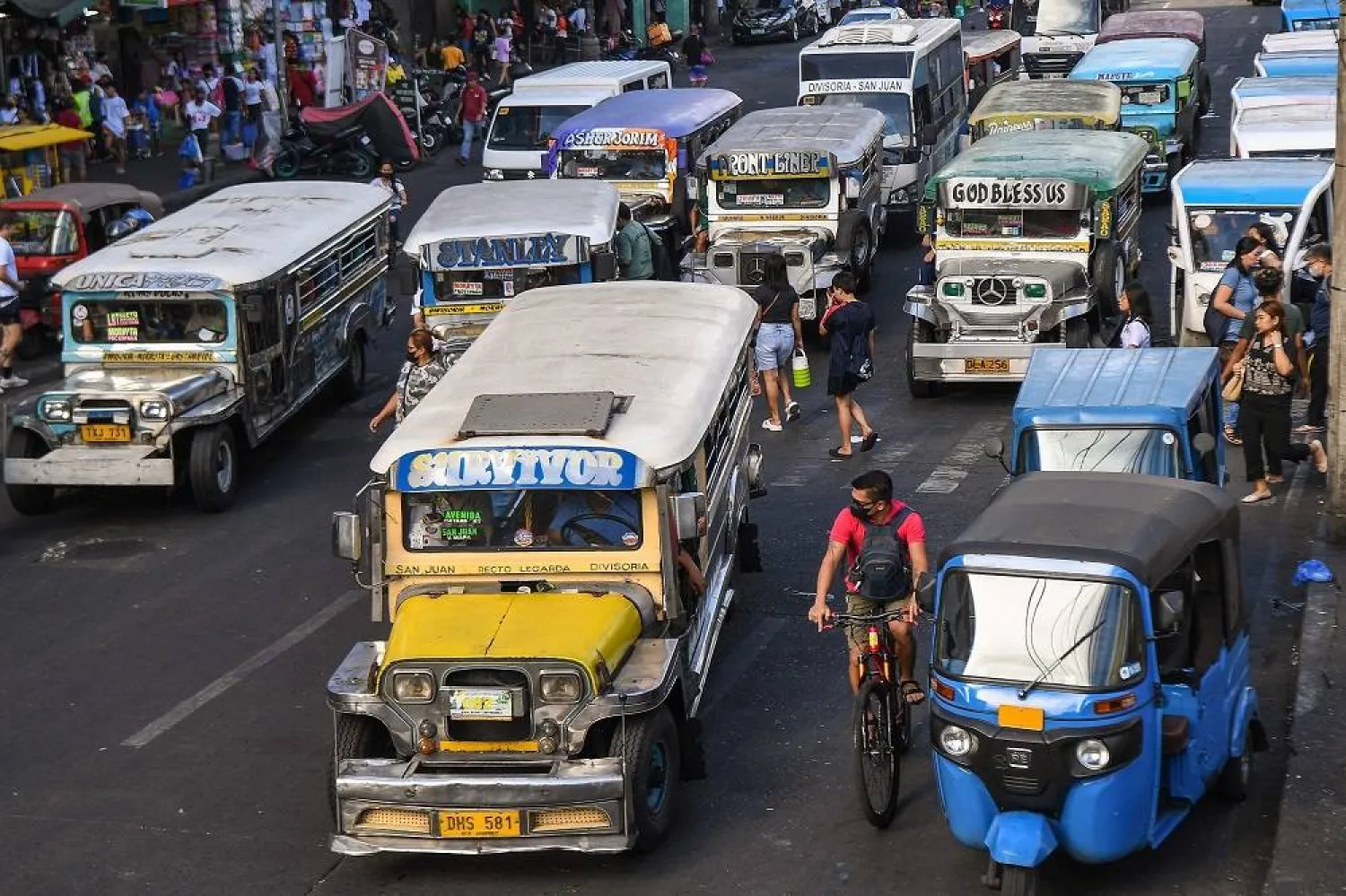

For a long commute in Metro Manila or a daily provincial bus ride there are two practical options: a 10,000 mAh bank with a built-in cable that you top up from every evening, or a 20,000 mAh bank that lasts two days of travel. If your one-way trip is under about 1.5 hours and you mostly listen to music or scroll, choose 10,000 mAh: it weighs around 180–220 g and gives a 5,000 mAh phone about one full charge. If you ride 2 hours or more each way, stream video, navigate or share a hotspot, choose 20,000 mAh: a model like the Xiaomi Power Bank 20000 Integrated Cable delivers about 13,000 mAh at 5 V, roughly two and a half phone charges, at 342 g. In both cases pick USB-C output of 20W or more, so a 20–30 minute stretch on the bus adds a useful 30–50% instead of 10%.
Commuter Power Bank Datasheet
| Model | Rated output at 5 V | Max output | Built-in cable | Size | Weight |
|---|---|---|---|---|---|
| UGREEN Nexode 10000 30W | 6,000 mAh | 30W | no | 103 × 52 × 22.5 mm | 180 g |
| Anker Zolo 10K 30W (A1688) | about 6,000 mAh (estimate) | 30W | USB-C | 110 × 66 × 25 mm | 217 g |
| Anker Zolo 10K Magnetic (A1684) | not listed | 30W cable, 7.5W wireless | USB-C | 104 × 69 × 21 mm | 223 g |
| Xiaomi Power Bank 10000 Integrated Cable | 5,500 mAh | 22.5W | USB-C | 105 × 65 × 27 mm | not listed |
| Anker Zolo 20K 30W | not listed | 30W (20W input) | USB-C | 120 × 73 × 31 mm | about 340 g |
| Xiaomi Power Bank 20000 Integrated Cable | 13,000 mAh | 22.5W | USB-C | not listed | 342 g |
Wireless magnetic banks are convenient when you stand in a crowded train, but at 7.5W they charge slowly and waste more energy as heat. Use the cable when the phone is really low. Our main power bank datasheet lists more 20,000 mAh models.
Which Size for Which Commute
| Commute | Daily phone use on the road | Recommended | Charge the bank |
|---|---|---|---|
| Under 1 h each way (jeep, LRT) | music, messages | 10,000 mAh | every 2–3 days |
| 1–2 h each way (MRT + bus, P2P) | social media, maps | 10,000 mAh with 30W output | every evening |
| 2–3 h each way (Cavite, Laguna, Bulacan to Makati or BGC) | video, maps, calls | 20,000 mAh | every 1–2 days |
| Provincial bus, 4 h or more | video, hotspot, two devices | 20,000 mAh with 2 outputs | before every trip |
How Many Days One Charge Lasts
Daily energy is commute hours multiplied by the average phone draw from the chart above. Bank energy that reaches the phone is taken as 60% for a 10,000 mAh bank and 65% for a 20,000 mAh bank, in line with the rated figures Xiaomi and UGREEN publish.
| Daily commute | Phone energy used | Share of a 5,000 mAh phone | 10,000 mAh bank lasts | 20,000 mAh bank lasts |
|---|---|---|---|---|
| 1 h × 2, music and messages | 2.0 Wh | 11% | 11.1 days | 24.1 days |
| 1.5 h × 2, social media | 4.5 Wh | 24% | 4.9 days | 10.7 days |
| 2 h × 2, maps and video | 9.0 Wh | 47% | 2.5 days | 5.3 days |
| 3 h × 2, video and hotspot | 16.5 Wh | 87% | 1.3 days | 2.9 days |
Read it together with your phone’s own battery: if the phone already covers the morning trip, the bank only needs to cover the evening one, which doubles the days between recharges.
Commuter Buying Checklist
- Weight under about 250 g for 10,000 mAh or 350 g for 20,000 mAh; heavier usually means older cells or a metal case.
- USB-C output of 20W or more, plus USB-C input so one phone charger refills both.
- A built-in cable or a lanyard cable, so nothing is forgotten in the morning rush.
- Capacity and Wh printed on the body, and a DTI ICC sticker; see our DTI-BPS certification guide.
- A flat shape that slides into a jacket or bag pocket; round “lipstick” banks roll off seats.
Commuter Habits That Save Battery
- Download playlists and shows at home on Wi-Fi. Streaming on 4G with a weak signal in a moving bus costs far more battery than playing offline files.
- Charge in the first half of the trip, while the phone is still at 30–50%. Fast charging is fastest at low and middle levels and slows down above about 80%.
- Keep the bank out of direct sun on the window side. Xiaomi rates its power banks for 5–35°C operation; a jeepney roof in April is well above that.
- Put the phone in airplane mode in long dead zones, for example tunnels or mountain stretches on provincial routes. Searching for signal is a major hidden drain.
- Use a short cable. A 20–30 cm cable is easier to manage in a crowded MRT and loses less energy than a 2 m one.
Three Typical Cases
Case 1: Bulacan to Makati, 2 hours each way
Four hours on the road a day with video and maps uses roughly 9 Wh, close to half of a 5,000 mAh phone, before any work calls or office use. By the table above, a 20,000 mAh bank covers about five such days and a 10,000 mAh bank about two and a half, so either works if recharged on schedule.
Case 2: student with a 45-minute LRT ride
Music and messages use only a few percent per trip. A 10,000 mAh bank, or no bank at all, is enough; see our student power bank guide for light models.
Case 3: provincial bus home for the weekend
Six hours with two phones and a tablet for the kids. A 20,000 mAh bank with two outputs keeps everyone above 50%. If the trip includes a flight, both 10,000 and 20,000 mAh banks are under the 100 Wh carry-on limit; details are in our high capacity guide.
Frequently Asked Questions
What size power bank is best for a long commute?
For trips under about 1.5 hours each way, 10,000 mAh is enough. For 2 hours or more, heavy video or hotspot use, choose 20,000 mAh, which gives about two to two and a half phone charges.
Is a magnetic power bank good for commuting?
It is convenient when standing in a crowded train because there is no cable. But wireless charging at 7.5W is slow and less efficient, so use the built-in cable when the phone is low.
Is it safe to charge my phone from a power bank on a jeepney or bus?
Yes, if the bank is certified and kept out of direct sun. Stop using it if it gets too hot to hold, swells or smells unusual.
How fast should my commuter power bank charge my phone?
20W or more over USB-C. At that speed a 20–30 minute ride adds about 30–50% to most phones; a 10W bank adds only about 15–20%.
Should I carry two small banks or one big one?
For daily travel, one bank sized to your commute is easier. Two 10,000 mAh banks make sense when two people share them or one is left charging at the office.
Sources: Xiaomi Power Bank 20000 specs; Xiaomi 10000 Integrated Cable specs, operating temperature; Anker Zolo 10K Magnetic specs; Anker Zolo 20K 30W specs (Beyond the Box PH); UGREEN PB502 datasheet.

Hi! I focus on power banks, charging systems, and real-world performance — mostly trying to understand why specs don’t always match reality. I enjoy breaking things down in a simple way, even if I overthink them first. In my free time, I hang out with my cat, drink more coffee than I probably should and sometimes forget to charge my phone in time, that is why power banks are my best friends!
8 thoughts on “Power Bank for Long Commute in the Philippines (2026): Which Size for Your Daily Ride”